Total War
From Ukraine to Iran, attacks on civilian infrastructure make no sense


OLD Prussian generals are back.
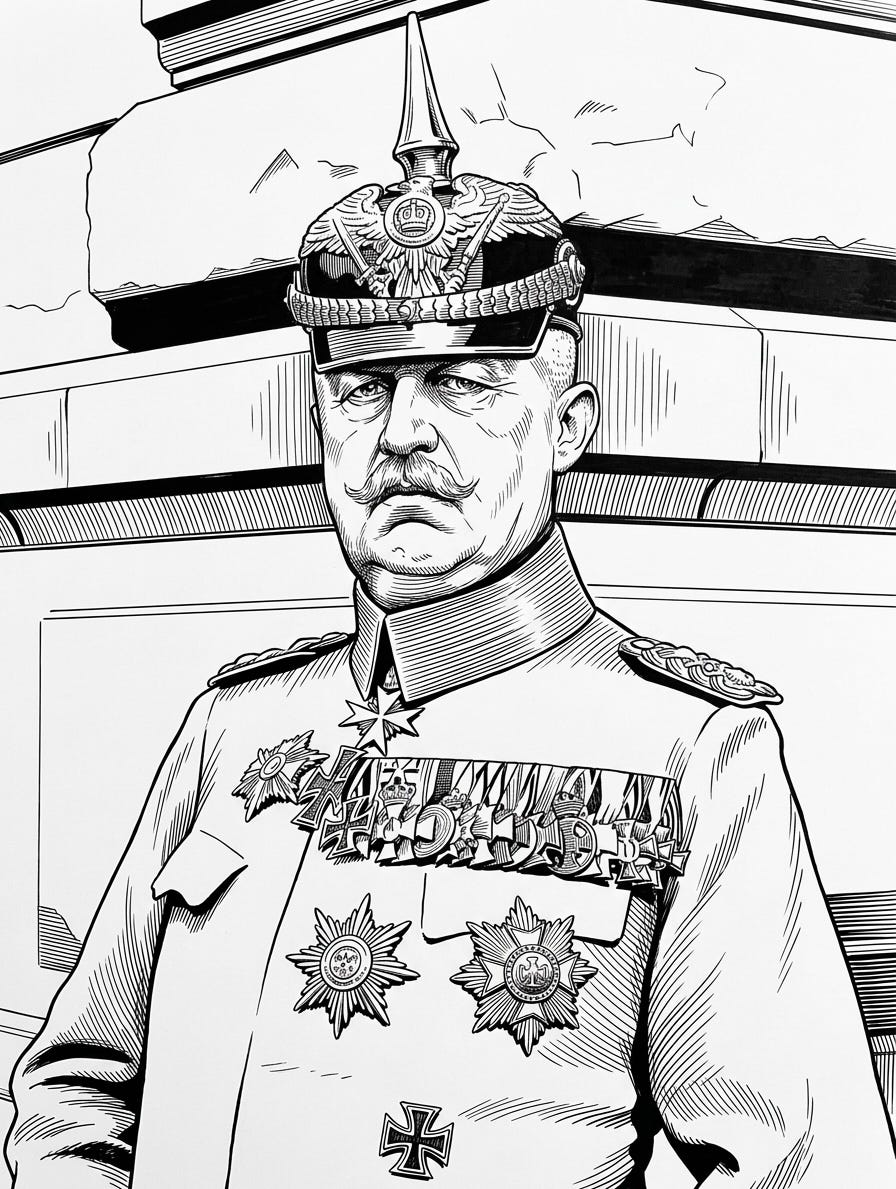
Karl von Clausewitz, the 19th-century military strategist, distilled the idea of “absolute war”—the notion that when you fight a war, you need to strike the enemy decisively to force a surrender. Half a century later, General Erich Ludendorff, licking his wounds after Germany’s defeat in World War I, broadened that concept into a “total war”—the idea that anyone and anything can and should be hit, not just soldiers and military targets. “Total war is not only aimed against the armed forces, but also directly against the people,” the general wrote in 1935. We know what happened a couple of years later.

Echoes of these maximalist ideas can be heard in President Trump’s threats to blow up “every bridge” and “every power plant” in Iran unless Tehran re-opens the Straight of Hormuz to oil tankers. Mr. Trump’s rhetoric and execution so far stop short of the old Prussian concepts of scorched-Earth warfare. But in repeatedly and gleefully announcing his intentions to destroy infrastructure critical to civilian life, the president is treading close to Gen. Ludendorff’s pointy-hatted intellectual territory.
Quaint notions of war crimes and morality aside, it is worth examining whether total war actually works in helping an attacking state achieve its strategic objectives. And we have one answer right in front of us, in Ukraine, where Russia’s unrelenting assault on the energy infrastructure and civilian targets has succeeded in bringing misery and death to Ukrainians but has failed in achieving Moscow’s stated goal of subjugating Ukraine. Quite the opposite has happened: total war against Ukraine has hardened the Ukrainian resistance, won it broad international support and sympathy, and turned Russia into a pariah state.
The wars in Ukraine and Iran are very different of course. The former is unjust, unprovoked and stupid all around: an imperial spasm directed against a democracy that posed a threat to nothing except Vladimir Putin’s sense of self. Iran actually poses a proven, existential threat to Israel, and a lesser threat to the broader region and to the U.S. So there are legitimate reasons for Israel and the U.S. to dismantle Iran’s nuclear and missile programs, and its capacity to wage war and terrorism through regional proxies.
But that’s quite different from threatening to bomb power plants and bridges, and not just on moral grounds or because of international legal constraints imposed on warfare after the bloodbaths of the 20th century. The Iranian regime, with its back against the wall, is fighting a war of survival.
Having slaughtered thousands of its own citizens in nationwide protests just before the war, the Iranian regime is highly unlikely to be coerced into surrender by more civilian misery delivered by outside powers. But what could start happening—if large-scale attacks against civilian infrastructure do take place as threatened—is a shift in Iranian public opinion toward rallying around the flag, even if it’s a flag representing a deeply unpopular theocracy fresh from a killing spree of its own citizens. That would be quite an accomplishment for Washington.
There are signs that some of this might be happening already. My friend and former colleague Farnaz Fassihi, writing in the New York Times, has published a riveting series of diary entries by ordinary Iranians sharing their thoughts and concerns as bombs fall around them. “What if this war leaves Iran in total ruins? What if we can never recover?” one woman, not a regime supporter, writes. She is also outraged by attacks against Iran’s historical sights and police stations. Meanwhile, Iran’s fractious opposition in exile, initially excited about the prospect of regime change, is rethinking its support for the war, the Economist reports.
Besides President Trump himself, the biggest proponent of total war is our aptly renamed Secretary of War Pete Hegseth. He often sounds like a walking Ludendorff meme generator. There’s talk of “maximum lethality”, of “no quarter, no mercy to our enemies”, of “death and destruction from the sky all night long.”
I knew a very different Pete 20 years ago when I was a Wall Street Journal reporter covering the war in Iraq. Mr. Hegseth was serving as an army officer in the city of Samarra, North of Baghdad. Sunni insurgents had just bombed a prominent Shiite Muslim shrine there, making the already raging Iraqi civil war even more violent, and turning Iraq ungovernable.
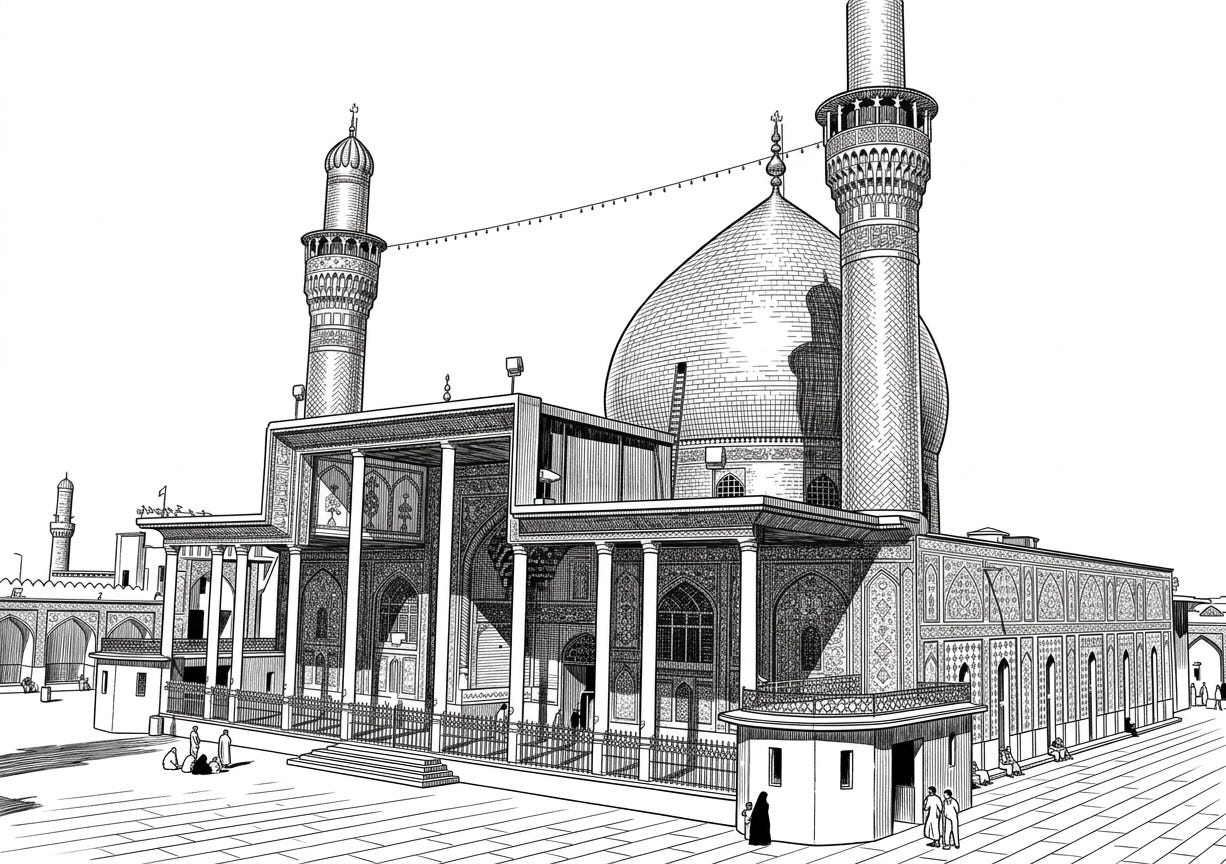
Samarra became a grim cityscape of frequent killings and destroyed police stations, of plastic bags blown onto coils of razor wire stretching along deserted streets. Roadside bombings, sniper fire and mortar attacks happened multiple times a day.
Mr. Hegseth and his Army unit were thrown into the middle of it, trying to solve the unsolvable puzzle of how to govern Samarra, provide basic services, haul away mountains of trash, and restore credible police presence. Mr. Hegseth and a couple of other officers I spent several days with went about this task with a combination of American can-do idealism, unconventional solutions, and above all, a genuine desire to help restore peace, often at significant risk to their own lives. The broader American war in Iraq was a misguided adventure, but there were plenty of stories of U.S. troops trying to clean up the mess of Washington’s making—even if in the end they didn’t succeed.
One day in Samarra in 2006, I went with Mr. Hegseth and a couple of other officers to inspect a ruined hulk of a municipal police station, which had been attacked by Sunni insurgents several times. As we stood in front of a giant hole blown through one of the walls, the officers wondered whether it made sense to rebuild the precinct—and probably see it destroyed again—or to move it to a more secure location.
I remembered that scene when reports emerged of U.S.-Israeli airstrikes targeting police stations in Tehran, which alongside helping conduct domestic repression also uphold basic law and order for ordinary Iranians—much like that doomed precinct in Samarra. Within 20 years, Mr. Hegseth has traveled the arc from building police stations in Iraq to destroying them in Iran, and that seems like a Ludendorffian transformation into a total-war practitioner. “You see, this is not 2003. This is not endless nation building under those types of quagmires we saw under Bush or Obama. It’s not even close,” the secretary of war said on March 9.
Of course the concept of total war, as envisioned by the austere German general in the 1930s, is not just about what you do to the enemy. It’s also about how you transform your own society and the economy to dedicate them wholeheartedly to the pursuit of war. In fact, Gen. Ludendorff thought Germany lost World War I because the German society and politicians weren’t dedicated enough. The Prussian-born general died in Munich in 1937, leaving it to an Austrian-born corporal to augment and implement his ideas on the global canvas.
America’s war in Iran is not a total war in the full Ludendorffian sense—at least not yet. Our society and the economy are largely shielded from the war effort. But wars have a way of escalating. If President Trump delivers on his threat to destroy “a whole civilization”—the Persian civilization is far older and richer than the narrow-minded Islamic republic—the musty Prussian ideas on how to fight decisive battles may yet become relevant again.